Institute for Global Nutrition, University of California, Davis
Moringa oleifera (moringa) is an ideal crop for better diets, healthier people, and sustainable land use. Moringa is 27 percent protein by dry weight -with all essential amino acids, contains high levels of nutrients, and has health-promoting properties.
We aim to increase consumption and production of climate-sensitive, nutrient-dense moringa to address food security, improve health, and foster land stewardship.
With our team of expert and beginning moringa farmers, we offer in-person and virtual training, and can provide new farmers and organizations support to start growing and eating moringa!
moringa awareness training
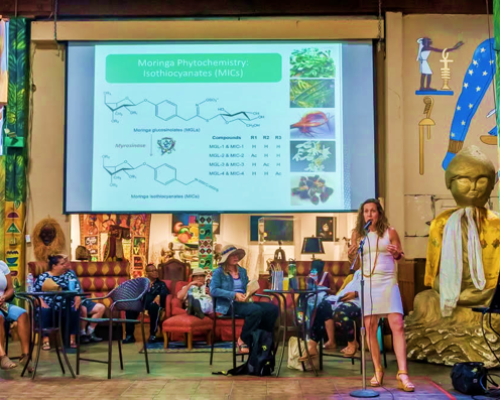
INCREASING AWARENESS AND CONSUMPTION OF NUTRIENT-DENSE MORINGA. Production of climate-sensitive, nutrient-dense specialty crops is imperative for sustainable food systems. Moringa oleifera (moringa) is an ideal crop for a healthier environment, healthier people, and prosperous farmers. Through a USDA Specialty Crop Block Grant, we developed a 3-part training series on moringa. This Moringa Awareness Training (Part 1 of 3) will discuss the historical and modern uses of the plant, its geographic and climatic distribution, the nutritional and health benefits of its leaves, fruits, and seeds, as well as the environmental benefits of cultivation.
Moringa’s Potential to Advance Health, Environmental Sustainability, and Economic Development
There is a need to develop and utilize more nutritious specialty crops that have less detrimental impact on the environment. Moringa’s rapid growth correlates with rapid carbon sequestration–helping to address escalating climate change issues. Simultaneously, children and adults need to increase their consumption of healthier vegetables, such as moringa, to combat the growing rates of obesity and chronic diseases.
Promoting and increasing awareness of the utility, benefits, and economic potential of moringa is crucial for many parts of the world. A limited water supply and climate change underscore the need for drought-tolerant, fast-growing crops to offset the costs and losses associated with crops that require more water, fertilizer, and time for farmers in the state.
Measurable Outcomes
increased consumption
increased access and awareness
Increased Farmers, Income, Markets
This website was initially funded by the USDA SCBGP in 2017 and is now maintained by Dr. Waterman. The information provided is based on numerous interviews with farmers, researchers, and entrepreneurs. Our team strives to co-create innovative and sustainable food systems that promote equitable and healthy communities.
Please contact us if you are interested in our training program, receiving product samples, or receiving seeds.
Trainings
0+
Project Beneficiaries
0
Market Expansion
0
Moringa
Moringa oleifera (moringa) is an ideal crop in speed with California’s mission to have a healthier environment, healthier people, and prosperous farmers. Moringa sequesters twenty times the amount of carbon of most vegetation, addressing current climate issues. Simultaneously, children and
adults need to increase consumption of healthier vegetables such as moringa to combat growing rates of obesity and chronic diseases. Moringa is 27 percent protein by dry weight, contains high levels of nutrients, and has health-promoting properties.
Potential Benefits
Nutrition
Provides children with essential vitamins and nutrients.
Stimulates breast milk production for infant nutrition.
Stabilizes body weight. Builds muscle and reduces excess fat.
Builds strong bones.
Health
Reduces blood pressure and cholesterol levels.
Controls blood sugar in prevention and treatment of diabetes.
Enhances brain function and memory. Reduces anxiety and headaches.
Prevents inflammation. Treat arthritis in joints.
Boosts immune system helping fight colds and viruses.
Improves energy and body function. Improves sleep.
Agriculture
Can be used as fertilizer and pest control.
Can be grown with other crops to increase their yield.
Moringa sequesters twenty times the amount of carbon of most vegetation. Help address current climate issues.
Moringa leaves as livestock feed has many benefits, including improved animal health, increased productivity, and reduced costs.
Moringa can also be used as a feed ingredient in fish feed, as it is a rich source of protein and other essential nutrients.
Moringa is a highly attractive plant for bees due to its abundant nectar and pollen production.
Added Value Products
Moringa oil is extracted from the seeds of the tree and is rich in antioxidants, essential fatty acids, and other beneficial compounds.
Leaves can be steeped to make a tea that is rich in antioxidants and other beneficial compounds.
Moringa powder is rich in vitamins, minerals, and protein, making it a popular ingredient in smoothies and other health foods.
Moringa supplements are used to provide a concentrated source of vitamins, minerals, and other nutrients, and are often used for their potential health benefits.
Moringa soap is a gentle and natural alternative to traditional soap.
The use of moringa in water purification is an important application of this versatile plant, and its ability to remove impurities from water has the potential to provide many benefits for communities around the world.